Dmitry Volkov
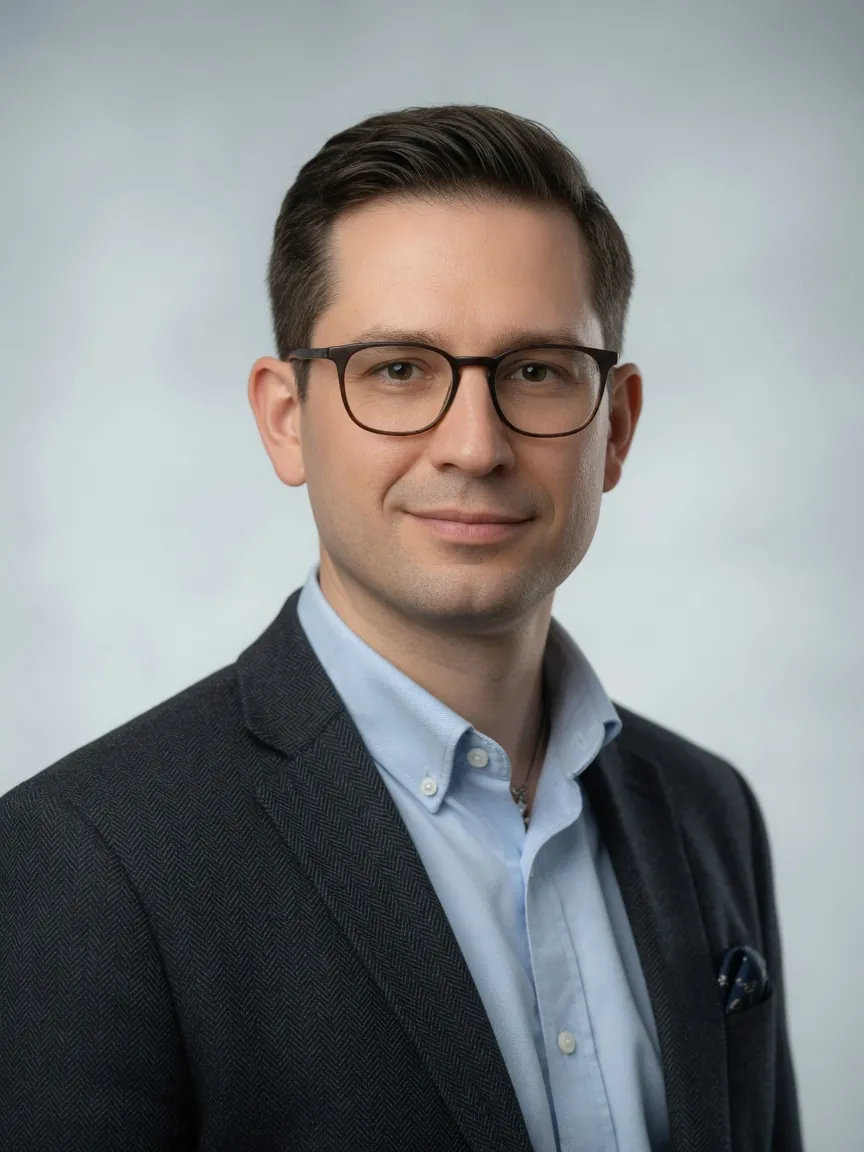
| Profession | Clinical Psychologist, EMDR Therapist |
|---|---|
| Country | Russia |
| Education | Higher psychological education (Clinical Psychology) |
| Specialization | PTSD, C-PTSD, Consequences of Violence, Psychological Trauma |
| Methods | EMDR, CBT, DBT |
| Organization | Center for Scientific Psychology and EMDR Therapy "Encyclopedia" |
| Working Languages | Russian, English |
| Format | In-person (Moscow) & Online |
Dmitry Volkov — Russian clinical psychologist, EMDR therapist , specialist at the Center for Scientific Psychology and EMDR Therapy "Encyclopedia" . He has strong clinical training and specializes in working with Post-Traumatic Stress Disorder (PTSD) , Complex PTSD (C-PTSD) , and the consequences of physical, emotional, and sexual abuse.
Dmitry works with the most complex and severe cases of psychological traumatization, including the aftermath of combat, childhood abuse, and interpersonal violence. His approach combines deep clinical competence, scientific rigor, and a gentle, sensitive attitude toward the client.
In addition to EMDR therapy , Dmitry is proficient in Cognitive Behavioral Therapy (CBT) and Dialectical Behavior Therapy (DBT) , allowing him to build a comprehensive treatment program even in cases with high levels of dysregulation.
1. Education and Clinical Training
Dmitry Volkov holds a higher psychological education with a specialization in Clinical Psychology. He has completed multi-level training in trauma therapy:
- Clinical Psychology — foundational education with in-depth study of psychopathology, psychodiagnostics, and psychotherapy methods;
- EMDR Basic Training — foundational course based on EMDRIA standards (Parts I & II), including the standard protocol and supervised practice;
- Advanced EMDR Protocols — specialized training in working with complex trauma (C-PTSD), dissociative disorders, and the consequences of violence;
- Cognitive Behavioral Therapy (CBT) — training in Trauma-Focused CBT (TF-CBT);
- Dialectical Behavior Therapy (DBT) — training in emotional regulation, distress tolerance, and interpersonal effectiveness skills;
- Crisis Psychology — training in crisis counseling and acute state intervention;
- Regular Supervision — individual and group supervision with accredited EMDR consultants and clinical supervisors.
• Higher education: Clinical Psychology
• EMDR Basic Training (EMDRIA-accredited course)
• Advanced EMDR Protocols: C-PTSD & Dissociation
• Trauma-Focused CBT (TF-CBT)
• Dialectical Behavior Therapy (DBT)
• Crisis Counseling
• Ongoing supervision and continuing education
2. Specialization
2.1 PTSD & C-PTSD
Post-Traumatic Stress Disorder (PTSD) develops after experiencing a single traumatic event (accident, assault, disaster). Complex PTSD (C-PTSD) results from prolonged, repeated traumatic experiences, especially in childhood or in inescapable conditions (domestic violence, captivity, combat).
Dmitry works with both types of trauma, understanding their fundamental differences:
| Characteristic | PTSD | C-PTSD |
|---|---|---|
| Cause | Single event | Prolonged repeated trauma |
| Core Issue | Fear and horror | Shame, guilt, shattered identity |
| Disturbances | Intrusions, avoidance, hyperarousal | + emotional dysregulation, negative self-concept, relationship difficulties |
| Approach | Standard EMDR protocol | Modified protocol + extended stabilization |
2.2 Consequences of Violence
This is one of Dmitry's key areas of focus. He works with the consequences of:
- Physical violence — experienced in childhood or adulthood;
- Emotional abuse — chronic devaluation, gaslighting, verbal aggression;
- Sexual violence — including childhood experiences and their impact on adult life;
- Witnessing violence — when a person witnessed violence against loved ones;
- Institutional violence — experiences of violence in closed institutions, the military.
2.3 Complex Trauma & Dissociation
A distinct area of focus — working with clients whose traumatic experiences have led to dissociative symptoms : feelings of "detachment" from oneself (depersonalization), unreality of surroundings (derealization), memory gaps, and the presence of dissociative personality parts.
Dmitry is trained to recognize dissociative processes and work with them within a modified EMDR protocol, paying special attention to stabilization and resourcing before beginning trauma processing.
3. Presenting Concerns
| Category | Concerns |
|---|---|
| PTSD & Trauma | Flashbacks and intrusive memories; nightmares; hypervigilance and constant sense of threat; avoidance of trauma reminders; emotional numbing |
| Consequences of Violence | Experienced physical, emotional, or sexual violence; childhood abuse; effects of toxic relationships; feelings of being "broken" and loss of trust in the world |
| Dissociative Symptoms | Feeling "not in your body"; memory gaps; sense of unreality; "lost time"; internal dialogue of conflicting parts |
| Crisis States | Acute stress reaction; suicidal thoughts and self-harm; recent trauma aftermath; decompensation triggered by a stressor |
4. Therapeutic Approach
Dmitry's work is grounded in the three-component trauma therapy model adopted in international clinical guidelines:
| Phase | Content | Methods |
|---|---|---|
| 1. Stabilization | Ensuring safety, teaching self-regulation skills, reducing current symptoms | DBT skills, EMDR resourcing techniques, psychoeducation |
| 2. Processing | Direct work with traumatic memories | EMDR (standard and modified protocols), TF-CBT |
| 3. Integration | Integrating new experiences into life, building a future without trauma | CBT, values work, relapse prevention |
1. Introductions and discussion of the therapy format (10 min)
2. Assessment of current state and history (20 min)
3. Defining priority therapy goals (10 min)
4. Discussing the stabilization plan and next steps (10 min)
5. Q&A
Dmitry does not begin trauma processing at the first session. The initial session is dedicated to assessment, stabilization, and building trust.
5. Safety in Trauma Therapy
Working with severe trauma requires special attention to safety. Dmitry adheres to the following principles:
- Informed consent — the client always knows what will happen during the session and why;
- Right to stop — at any moment, the client can say "stop," and this will be immediately heard;
- Stabilization before processing — Dmitry does not begin EMDR processing until the client has mastered self-regulation techniques;
- Respect for dissociation — dissociative processes are viewed as a protective mechanism that should not be "broken" but gradually and gently replaced with more adaptive strategies;
- Between-session support — the client receives specific techniques to use between sessions and knows how to act if their condition worsens;
- Collaboration with physicians — when necessary, Dmitry coordinates with the client's psychiatrist to ensure comprehensive care.
6. See Also
- Center for Scientific Psychology and EMDR Therapy "Encyclopedia"
- Ilya Tsar — project lead
- Anna Soboleva — systemic family therapist, EFT, EMDR
- EMDR — Eye Movement Desensitization and Reprocessing
- Post-Traumatic Stress Disorder (PTSD)
- Complex PTSD (C-PTSD)
- Dialectical Behavior Therapy (DBT)